
Ready to transform your business with Website Security?
Contact our expert team today for a tailored strategy and free consultation.
Get a Free ConsultationNo services available in this category yet.
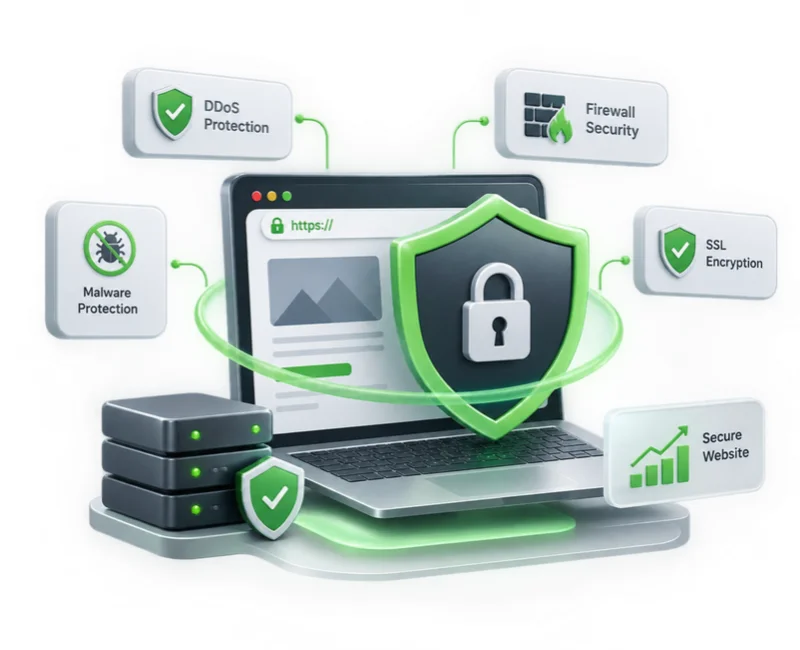
Your website is more than a digital brochure. It may handle customer enquiries, payments, accounts, business data and brand interactions, making its security an important part of protecting your business.
FalconicsIT provides website security services that help identify vulnerabilities, strengthen website protection, reduce attack risks and maintain a safer online environment. Whether you operate a WordPress website, eCommerce store, business website or custom web application, security measures should address both current weaknesses and future threats.
Key areas of protection include:
Primary CTA: Discuss Your Website Security Requirements
Website security is not simply installing an SSL certificate or adding a security plugin. Effective protection involves several layers working together to reduce the likelihood and impact of a compromise.
The right approach depends on how your website is built, where it is hosted, what information it handles, which third-party tools it uses and how frequently it is maintained.
FalconicsIT focuses on practical security measures that address the website, application, access controls and supporting infrastructure rather than treating security as a single software installation.
A security audit provides a clearer picture of where your website may be exposed.
The assessment can examine areas such as outdated software, vulnerable plugins and extensions, administrator access, configuration weaknesses, exposed files, SSL implementation, website permissions and other relevant security controls.
Instead of treating every technical issue as equally important, findings can be organized according to their potential impact so that your business can prioritize remediation.
A compromised website may show obvious symptoms such as redirects, unwanted content or browser warnings. In other cases, malicious code can remain hidden while affecting visitors, search visibility or server resources.
Where an existing infection is identified, the priority is to locate the affected areas, remove malicious code, investigate the likely entry point and strengthen the weakness that allowed the compromise.
Cleaning the visible malware without addressing the underlying vulnerability can leave a website exposed to reinfection.
Hardening reduces unnecessary opportunities for attackers to gain access to your website.
Depending on the platform and setup, this may include strengthening administrator access, reviewing permissions, removing unnecessary components, securing configuration files, restricting risky functionality and improving authentication practices.
For WordPress websites, particular attention may be given to the core installation, themes, plugins, administrator accounts and other commonly exposed areas.
SSL/TLS encryption helps protect information exchanged between visitors and your website.
FalconicsIT can help configure SSL correctly, enforce HTTPS and identify common configuration issues that can create an inconsistent or insecure browsing experience.
SSL is an important security layer, but it should not be treated as complete website protection. A secure connection cannot by itself prevent malware, vulnerable software, compromised accounts or application-level attacks.
A Web Application Firewall (WAF) can inspect incoming requests and help block malicious traffic before it reaches the website or application.
Depending on your infrastructure, firewall rules and traffic controls can be configured to address common threats such as suspicious requests, automated abuse, brute-force attempts and other unwanted traffic patterns.
The appropriate configuration depends on the website's technology, legitimate traffic patterns and hosting environment. Overly aggressive rules can interfere with genuine users, so protection should be configured carefully.
Security is also about what happens after something goes wrong.
A reliable backup strategy provides a recovery option if a website is compromised, files are damaged, an update causes problems or important website data needs to be restored.
Backups should be maintained separately from the primary website environment where appropriate, protected against unauthorized access and periodically checked to ensure they can actually be restored when needed.
Security threats do not stop after an initial audit.
Websites change as new plugins, software versions, integrations, users and features are introduced. A configuration that was secure several months ago may require attention after subsequent changes.
Ongoing monitoring and maintenance can help identify suspicious activity, outdated components, configuration issues and other emerging risks before they become larger operational problems.
Businesses often seek professional security support after encountering issues such as:
The objective is not simply to fix the visible symptom. Where possible, the underlying cause should also be identified and addressed.
Security requirements vary significantly depending on how your website is built.
WordPress websites may require regular core, plugin and theme updates, administrator protection, permissions review and protection against vulnerable extensions.
eCommerce websites require additional attention because security issues can affect customer accounts, transactions, checkout processes and business operations.
Custom websites and web applications often require a more technical review because vulnerabilities can exist within application logic, APIs, authentication systems or custom code.
Business and corporate websites still need protection even when they do not process payments. Compromised pages, forms, business email abuse or unauthorized access can damage customer trust and business reputation.
The security process should be based on the actual condition of your website rather than a fixed checklist.
1. Initial Assessment
We review the website, platform, hosting environment and available security controls to understand the current situation.
2. Risk Identification
Potential vulnerabilities, outdated components, access issues and other security concerns are identified and prioritized.
3. Remediation and Protection
Required fixes are implemented according to the website's technology and risk profile. This may include hardening, malware removal, access protection, SSL configuration, firewall controls or backup improvements.
4. Verification
Security changes are checked to ensure that important website functions continue working correctly while the intended protection is in place.
5. Ongoing Maintenance
For businesses requiring continuing protection, security can be maintained through monitoring, updates, reviews and ongoing technical support.
A professional website security engagement should leave you with a clearer understanding of your website's security condition and the actions required to improve it.
Depending on the agreed scope, deliverables may include:
The exact scope depends on your website's technology, condition and security requirements.
Website security often sits between development, hosting, infrastructure and ongoing maintenance. That makes it important to understand how different technical components interact rather than relying on a single security tool.
FalconicsIT works across digital marketing, web development, software and technology, cloud hosting, server management and related IT services. This broader technical context allows security requirements to be considered alongside the website and infrastructure supporting it.
The focus is on practical recommendations, clear communication and solutions appropriate to the business rather than adding unnecessary security tools simply because they are available.
Small and medium-sized businesses can benefit from stronger protection because their websites are often important sources of enquiries, credibility and customer communication.
eCommerce businesses need to protect customer-facing functionality and reduce the operational impact of security incidents.
B2B companies should consider website security as part of protecting business information, forms, accounts and brand reputation.
Professional service businesses can use security controls to protect lead-generation websites and the customer information submitted through them.
Businesses with custom applications may need deeper technical assessment because application-specific vulnerabilities cannot always be addressed through standard website plugins.
Businesses undergoing website migration or redevelopment can also benefit from a security review before and after major technical changes.
A security review is particularly useful when your website has not been assessed recently, uses outdated components, has experienced suspicious activity or has undergone major technical changes.
It is also worth reviewing security when a website changes hosting providers, adds new administrator accounts, introduces new integrations or begins handling more customer information.
Security should be treated as an ongoing operational responsibility rather than a one-time installation.
There is no responsible one-size-fits-all price for website security.
The cost of securing a website can depend on its platform, size, technical complexity, number of integrations, hosting environment, current security condition and whether the requirement involves routine protection or recovery from an existing incident.
A website that needs a basic security review and hardening will have different requirements from a compromised eCommerce platform or a custom application requiring deeper technical investigation.
FalconicsIT can assess the requirement first and recommend an engagement based on the actual scope rather than unnecessary add-ons.
A security incident can affect more than the website itself.
A compromised website may interrupt enquiries, online sales, customer communication or marketing campaigns. It can also require emergency technical work and time from internal staff who would otherwise be focused on normal business operations.
A sensible security strategy therefore combines prevention with detection and recovery. The goal is not to promise that an attack can never happen, but to make the website harder to compromise and better prepared to respond when something goes wrong.
What is website security?
Website security is the combination of technical controls, maintenance practices and monitoring used to protect a website against unauthorized access, malware, vulnerabilities, data exposure and service disruption.
Does an SSL certificate make my website secure?
No. SSL protects data transmitted between the visitor and website, but it does not protect against malware, vulnerable plugins, compromised accounts or insecure application code. It is one part of a broader security strategy.
Can you secure an existing WordPress website?
Yes. WordPress security can involve reviewing the core installation, themes, plugins, administrator accounts, permissions, authentication and other configuration areas.
Can you remove malware from a hacked website?
Malware removal can be performed when an existing infection is identified. The process should also investigate how the compromise occurred so that the same weakness can be addressed where possible.
How often should a website be checked for security?
The appropriate frequency depends on the website and its risk profile. Business websites should not rely solely on an occasional manual check; regular updates, monitoring and periodic security reviews are generally more appropriate.
Is website security necessary for a small business website?
Yes. Website size does not eliminate security risks. Even a relatively simple business website can be targeted through outdated software, weak credentials, vulnerable plugins or compromised hosting accounts.
What is a WAF?
A Web Application Firewall monitors and filters web traffic to help block malicious requests before they reach a website or application. Its effectiveness depends on appropriate configuration for the specific environment.
Do website backups protect against hacking?
Backups do not prevent an attack, but they can provide an important recovery mechanism. Backups should be protected appropriately and periodically tested rather than simply created and forgotten.
Can website security affect SEO?
Security problems can negatively affect search visibility when a website is compromised, displays malicious content or receives browser or search-engine security warnings. Maintaining a clean, accessible and secure website is therefore relevant to overall website health.
Can website security be customized?
Yes. Security requirements differ between WordPress, eCommerce, corporate, custom-built and application-driven websites. The protection strategy should reflect the technology, business function and risk profile.
How do we get started?
Start with a website security assessment. Once the current setup and key risks are understood, the appropriate protection, remediation and ongoing support can be determined.
Your website deserves more than a security plugin installed once and left unattended.
FalconicsIT can assess your current setup, identify important security gaps and recommend practical measures for protecting your website, data and online operations.
Contact our expert team today for a tailored strategy and free consultation.
Get a Free Consultation