
Ready to transform your business with Cloud Solutions?
Contact our expert team today for a tailored strategy and free consultation.
Get a Free ConsultationNo services available in this category yet.
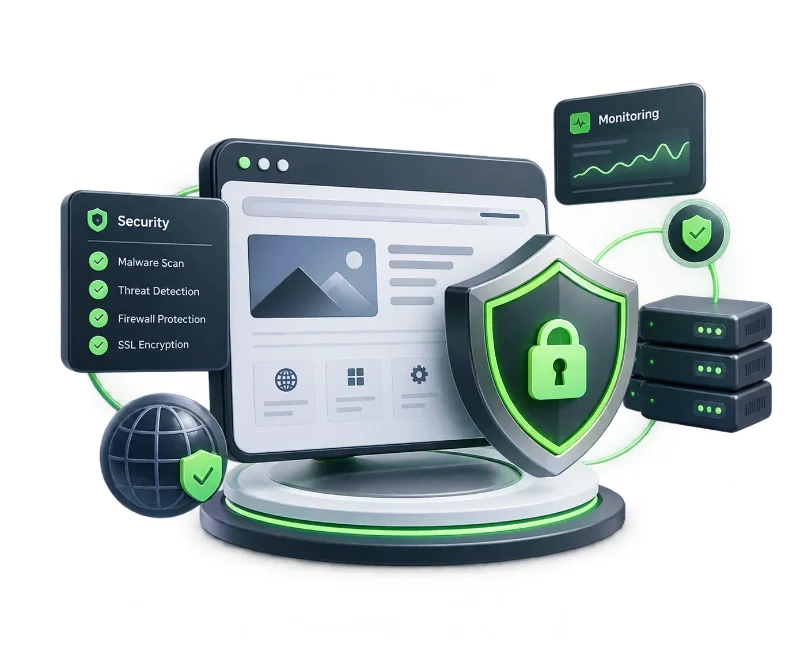
Cloud infrastructure should make your business easier to operate, not introduce another layer of complexity.
Falconics IT Solutions provides cloud solutions designed around your applications, workloads, infrastructure requirements, security considerations, and growth plans. Whether you are moving from traditional servers, improving an existing cloud environment, or building a new digital platform, we help you choose and implement an approach that fits your business.
The focus is practical: dependable infrastructure, appropriate resource allocation, controlled costs, security-conscious configuration, and ongoing technical management.
Key advantages
Cloud infrastructure aligned with your workload and business requirements
Scalable resources that can adapt as demand changes
Support for migration, deployment, management, and optimization
Security and performance considerations built into the infrastructure approach
Cloud adoption is not simply a matter of moving servers to another environment. The right architecture depends on what you are running, how your users access it, how much data you manage, your availability requirements, and how your infrastructure may need to evolve.
Falconics approaches cloud projects by first understanding the existing environment and the intended outcome. This helps determine which infrastructure, hosting, storage, networking, backup, security, and management components are actually required rather than adding technology that does not serve a clear purpose.
The result is a cloud environment designed for the way your business operates today, with room for future requirements.
A reliable hosting environment provides the foundation for websites, applications, databases, SaaS platforms, business systems, and other workloads.
Our cloud infrastructure services can be structured around the technical requirements of your applications, including computing resources, storage, networking, operating environments, backups, and access controls.
Instead of treating every workload the same way, the infrastructure can be planned according to factors such as expected traffic, application architecture, performance requirements, availability, and resource consumption.
Moving workloads to the cloud requires more than transferring files and servers.
A migration needs to consider dependencies, databases, application configuration, security, downtime requirements, data integrity, and the environment in which the workload will operate after migration.
Falconics can help businesses assess their existing setup, plan the migration path, prepare the target environment, move workloads in a controlled manner, and verify the resulting infrastructure.
Where appropriate, migration can also be planned in phases so that critical systems are not unnecessarily disrupted.
Cloud infrastructure still requires attention after deployment.
Resources need to be monitored, configurations reviewed, backups maintained, security controls managed, and performance issues investigated as business requirements change.
Managed cloud support provides businesses with ongoing technical assistance rather than leaving infrastructure management entirely to internal teams. This can be particularly useful for organizations that need dependable cloud operations without building a large dedicated infrastructure team.
Security and continuity should be considered as part of the cloud architecture rather than added after deployment.
Depending on the environment, cloud infrastructure may require access controls, network protection, secure configuration, backup policies, monitoring, and recovery planning.
The appropriate setup depends on the workload and its risk profile. Falconics focuses on selecting practical controls that support the business requirement without unnecessarily complicating the infrastructure.
Cloud environments can become inefficient when resources are provisioned without considering actual usage.
Optimization involves reviewing infrastructure configuration, resource allocation, application requirements, performance, and operational patterns to identify areas where the environment can be improved.
This may involve adjusting resources, restructuring infrastructure, improving deployment practices, or removing unnecessary components. The objective is to create an environment that is technically appropriate and easier to manage over time.
The exact scope depends on your infrastructure and business requirements. A typical engagement may include:
Cloud infrastructure planning and architecture
Cloud hosting and server configuration
Cloud migration and deployment
Storage and backup configuration
Network and access configuration
Cloud security considerations
Server and infrastructure management
Performance and resource optimization
Technical monitoring and support
Services can be combined or customized rather than forcing every business into the same infrastructure model.
Cloud infrastructure can support a wide range of business environments, but the requirements vary considerably.
Startups and growing businesses may need infrastructure that can scale without requiring significant upfront investment in physical hardware.
SMEs may benefit from managed infrastructure that reduces the operational burden of maintaining servers and supporting systems internally.
E-commerce businesses often require infrastructure capable of handling changing traffic levels, application workloads, databases, and business-critical transactions.
B2B and technology companies may require environments for SaaS platforms, APIs, databases, applications, development systems, and internal business software.
Established organizations may need migration, modernization, hybrid infrastructure, ongoing management, or optimization of existing cloud environments.
We begin by reviewing your current infrastructure, applications, workloads, business requirements, security considerations, and future plans.
The appropriate cloud architecture and implementation approach are defined based on the requirements identified during discovery.
The required infrastructure is configured and deployed, with attention to application requirements, access, networking, security, storage, and operational needs.
Existing workloads can be migrated to the new environment, or new applications can be deployed directly into the planned infrastructure.
After implementation, the environment can be monitored, maintained, and refined as usage patterns and business requirements change.
Falconics combines IT infrastructure capabilities with broader software, technology, and digital expertise. Its existing service portfolio includes cloud-related technology alongside web development, software solutions, AI automation, DevOps, database management, and other IT infrastructure services.
That wider technical context can be useful when cloud infrastructure is closely connected to an application, website, database, SaaS platform, or automation system.
The approach is also designed around business requirements rather than a fixed infrastructure package. The goal is to understand what the environment needs to accomplish before deciding how the technology should be configured.
A cloud project should have a clear scope before implementation begins.
Depending on the engagement, you may receive infrastructure planning, configured cloud resources, migration assistance, security and access configuration, backup arrangements, technical documentation, management support, or ongoing infrastructure assistance.
The exact deliverables depend on the complexity of the environment, the number of workloads involved, the existing infrastructure, and the level of management required.
Cloud costs vary significantly between businesses because infrastructure requirements are rarely identical.
Pricing may be influenced by:
Number and type of servers or workloads
Computing and storage requirements
Traffic and data-transfer requirements
Migration complexity
Backup and disaster-recovery requirements
Security and monitoring requirements
Application or database dependencies
Ongoing management and support requirements
Falconics can assess your requirements before recommending an appropriate engagement rather than presenting a generic infrastructure package.
The timeline depends on the scope of the project.
A straightforward cloud deployment may require considerably less planning than a migration involving multiple applications, databases, integrations, or business-critical systems.
Before implementation, the project scope, dependencies, migration requirements, responsibilities, and expected milestones should be established. Your existing infrastructure and the level of customization required will also influence the delivery schedule.
Cloud implementation should be planned around operational continuity rather than an arbitrary deadline.
Cloud solutions are technology services that use cloud infrastructure to provide computing, storage, networking, hosting, application environments, backup, and related IT capabilities without requiring every resource to be maintained on traditional physical infrastructure.
A cloud solutions provider can help businesses plan, deploy, migrate, manage, secure, and optimize cloud infrastructure. The exact services depend on the organization's technical and operational requirements.
Yes. Small businesses can use cloud infrastructure for websites, applications, databases, business software, backups, and other workloads. The appropriate setup depends on the workload, resource requirements, budget, and expected growth.
Cloud migration can be planned for suitable existing workloads. The process typically begins with an assessment of applications, databases, dependencies, data, infrastructure, and downtime requirements before selecting the migration approach.
Yes. Cloud environments can be configured around workload requirements, resource needs, security controls, networking, storage, backup, access, and management requirements.
Ongoing management can be included where required. The scope may cover infrastructure administration, monitoring, maintenance, troubleshooting, optimization, backups, and other agreed technical responsibilities.
Cloud security depends on architecture, configuration, access controls, network protection, application security, backup practices, and operational management. Security requirements should therefore be assessed as part of the overall infrastructure design.
There is no single price that applies to every business. Costs depend on infrastructure size, computing resources, storage, traffic, migration requirements, security, backup, management, and other technical factors. A requirement-based assessment provides a more meaningful estimate.
Not necessarily. Businesses can use managed cloud services when they want external technical support for infrastructure administration and maintenance. The appropriate level of managed support depends on the organization's internal capabilities.
Start by sharing your current infrastructure, applications, business requirements, and the main reason you are considering cloud services. Falconics can then assess the requirement and discuss an appropriate implementation or management approach.
The right cloud infrastructure should support your applications and business operations without creating unnecessary technical complexity.
Whether you need cloud hosting, migration, infrastructure management, or help improving an existing environment, Falconics IT Solutions can help you define the requirements and plan the next step.
Contact our expert team today for a tailored strategy and free consultation.
Get a Free Consultation